Fire Training Courses
- Title 22 PSFA 21hr Course
- Fire Officer 2A
- Fire Officer 2B
- Fire Officer 2C
- Company Officer 2A: HR Management - 40hrs
- Company Officer 2B: General Administrative Functions - 24hrs
- Company Officer 2C: Fire Inspections and Investigation - 40hrs
- Company Officer 2D: All-Risk Command Operations - 40hrs
- Company Officer 2E: Wildland Incident Operations - 40hrs
- Confined Space Entry/Rescue Technician for General Industry - 24hr
- Hazardous Materials Incident Commander - 16hrs
- S-290 Intermediate Fire Behavior - 40hrs
- NFPA 1005: Marine Fire Fighting for Land-Based Firefighters - 40hrs
- ICS-200 - 4hr course
- ICS-300 - 21hrs
- ICS-400 - 15hrs
California State Fire Training UPDATE - "The curriculum update occurred as a philosophical shift in SFT training and education instructional delivery, grounded in a more experiential on-the-job training methodology. This new model was designed to provide focused face-to-face instruction, coupled with independent reading, research, and task book-based application. The intent was that candidates would be provided the opportunity to engage in their certification task book concurrent with their coursework completion. This change was widely accepted by stakeholders and approved by the Statewide Training and Education Advisory Committee (STEAC) and the State Board of Fire Services (SBFS)."
TAPs can deliver the new Fire Officer courses at your facility or any combination of face-to-face and synchronous online (Zoom) instruction. These courses include lecture and out of class assignments developed to complete task book requirements.
Contact us at info@tapstraining.com.
Title 22 Course
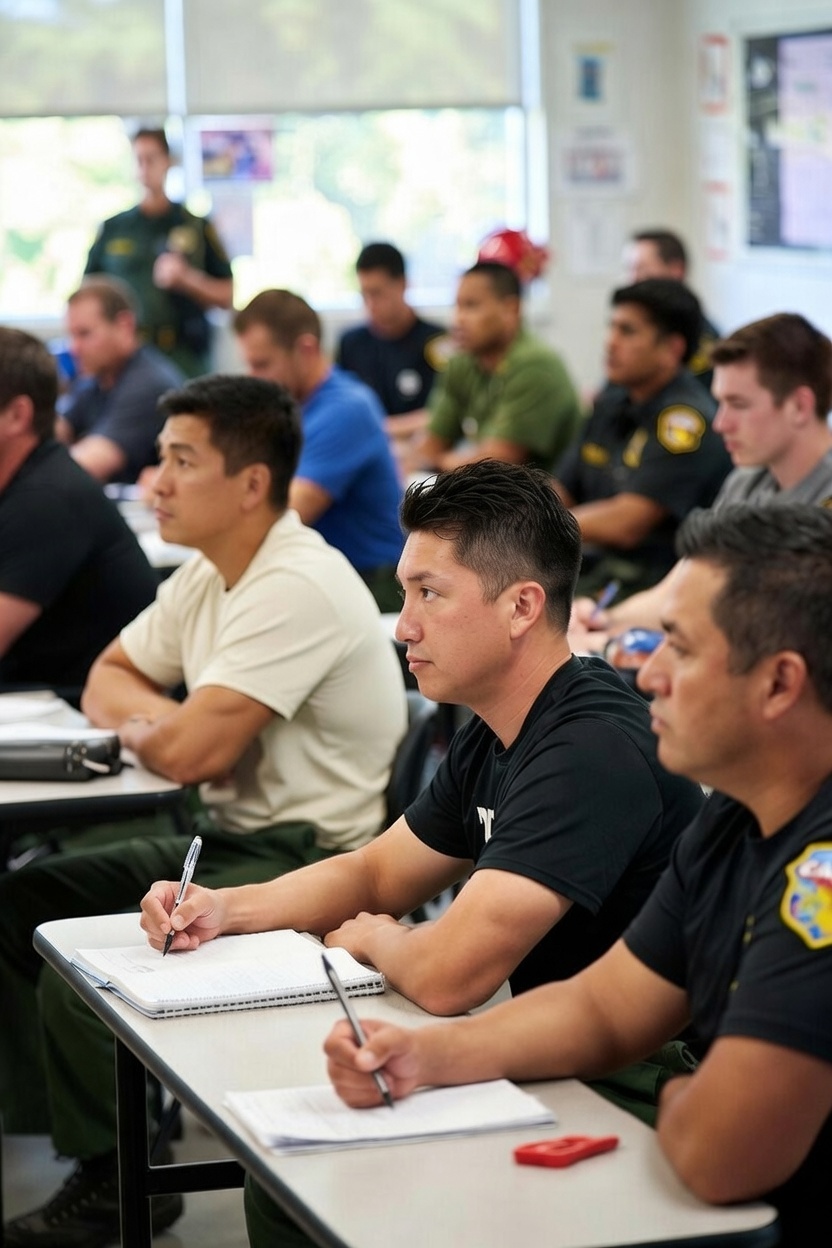
The Title 22 Public Safety First Aid (PSFA) course is mandated by California Code of Regulations, Title 22, Division 9, Chapter 1.5, and is designed specifically for public safety personnel including firefighters, lifeguards, peace officers, and CAL FIRE personnel. This comprehensive 21-hour course meets the minimum medical training requirements for careers in California public safety and provides advanced first aid skills that go beyond basic CPR certification.
The course covers critical emergency response topics including scene and patient assessment, pro-rescuer CPR/AED, bleeding control and shock management, wound care, sudden illnesses (heart attack, stroke, seizures, diabetic emergencies), musculoskeletal injury care and spinal motion restriction, emergency childbirth, poisoning and drug abuse response, environmental emergencies, and tactical casualty care. Students must successfully complete both written and practical skills examinations to receive certification, which is valid for two years. The demanding nature of this course requires dedicated study time between sessions to master the comprehensive curriculum.
Fire Officer 2A
This course provides the skills and knowledge needed for a Fire Officer 2 to safely, effectively, and competently apply human resource policies and procedures, create a professional development plan, evaluate and maximize employee performance, recommend action for employee support, coordinate routine tasks and responsibilities, direct employees during a training evolution, understand the value of physical and medical fitness, implement safety measures and regulations, and conduct an accident investigation.
Fire Officer 2B
This course provides the skills and knowledge needed for a Fire Officer 2 to safely, effectively, and competently execute routine administrative functions, collect incident response data, and prepare concise reports; cooperate with allied organizations, address citizen concerns, and implement a community risk reduction program; describe fire inspection procedures, conduct pre incident planning, secure incident scenes, and determine fire origin and cause; and develop and implement a project or program to support organizational change.
Fire Officer 2C
This course provides the skills and knowledge needed for a Fire Officer 2 to safely, effectively, and competently acquire foundational skills and carry out initial actions, initial incident action planning, incident operations, and post incident activities at an initial Type 4 incident.
Company Officer 2A: Human Resource Management - 40hrs
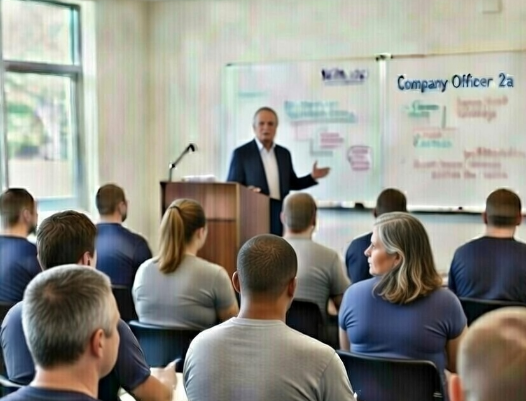
Company Officer 2A is part of the California State Fire Marshal's Company Officer certification series, aligned with NFPA 1021 Fire Officer Professional Qualifications standards. This 40-hour course is designed for aspiring company officers who have met the educational requirements for Fire Fighter II and focuses on developing essential leadership and human resource management skills necessary for supervising fire service personnel.
The curriculum provides comprehensive instruction on effectively using human resources to accomplish assignments, evaluating member performance, supervising personnel during daily operations and emergency scenes, and integrating health and safety plans, policies, and procedures into all activities.
Topics include theories of supervision and leadership in the fire service, the Firefighters Bill of Rights, performance evaluation systems, disciplinary procedures, injury and illness prevention programs (IIPP), labor relations, and managing workplace diversity. Students learn to apply management concepts to real-world scenarios and develop the interpersonal skills needed to lead fire companies effectively. Upon successful completion, students receive California State Fire Marshal certification credit toward Fire Officer Level I or II certification.
Company Officer 2B: General Administrative Functions - 24hrs
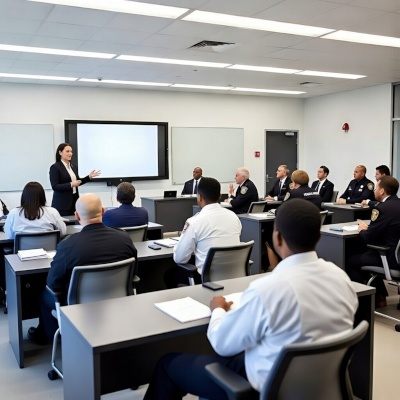
Company Officer 2B provides essential training in the general administrative functions required of fire service company officers. This 24-hour course builds upon the foundation established in Company Officer 2A and is part of the comprehensive Company Officer certification program aligned with NFPA 1021 standards. The course is designed for firefighters who have completed Fire Fighter II educational requirements and are advancing toward company officer positions.
The curriculum covers critical administrative responsibilities including budget management, resource allocation, report writing and documentation, records management, policy implementation, equipment inventory and maintenance tracking, and ensuring regulatory compliance. Students learn to manage the day-to-day administrative operations of a fire company while maintaining operational readiness.
The course emphasizes practical application of administrative procedures, effective communication with upper management, and utilizing technology for administrative tasks. This training prepares future company officers to handle the behind-the-scenes responsibilities that keep fire stations running efficiently and effectively.
Company Officer 2C: Fire Inspections and Investigation - 40hrs
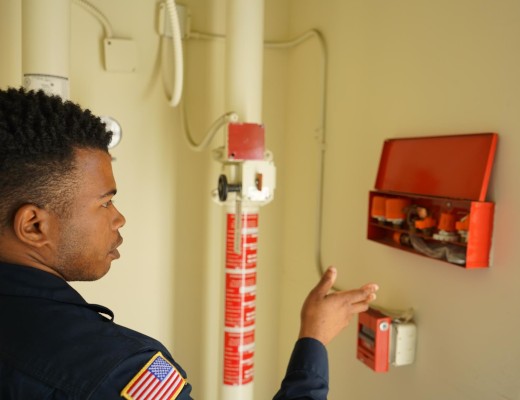
Company Officer 2C is a 40-hour course that prepares fire service personnel to conduct fire inspections, identify hazards, address code violations, and perform preliminary fire investigations. This course is part of the California State Fire Marshal's Company Officer certification series and aligns with NFPA 1021 and NFPA 1031 standards. It is designed for firefighters who have met Fire Fighter II educational requirements and are preparing for company officer roles.
The curriculum provides comprehensive training in building construction, fire code enforcement, occupancy classifications, fire protection systems, hazardous materials identification and storage requirements, means of egress requirements, and inspection documentation procedures.
Students also learn fundamental fire investigation techniques including determining fire origin and cause, preserving and documenting evidence, securing incident scenes, interviewing witnesses, and preparing investigation reports. The course emphasizes the company officer's role in community risk reduction through proactive inspections and the importance of thorough preliminary investigations. Practical exercises and real-world scenarios prepare students to confidently perform inspection and investigation duties as part of their company officer responsibilities.
Company Officer 2D: All-Risk Command Operations - 40hrs
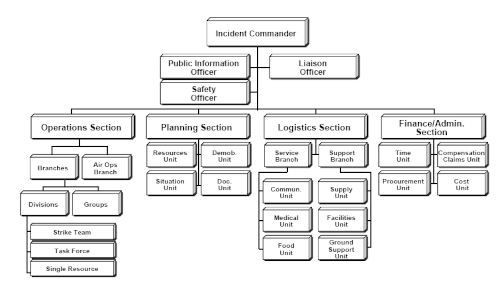
Company Officer 2D is an intensive 40-hour course designed to develop the incident command skills necessary for managing single and multi-unit operations across all types of emergency incidents. This course is part of the California State Fire Marshal's Company Officer series and aligns with NFPA 1021 standards. Prerequisites include completion of Fire Fighter II educational requirements and ICS-200 (Incident Command System for Single Resources and Initial Action Incidents).
The comprehensive curriculum covers conducting incident size-ups, developing and implementing initial action plans, managing resources effectively, establishing command structure, tactical decision-making for structure fires, vehicle accidents, medical emergencies and other all-hazard incidents, risk management and firefighter safety, conducting pre-incident planning, utilizing the Incident Command System, coordinating multi-agency operations, and conducting post-incident analysis.
Students participate in realistic scenario-based exercises that simulate the challenges of commanding emergency incidents of increasing complexity. The course emphasizes leadership under pressure, effective resource deployment, clear communication, and making sound tactical decisions that prioritize firefighter safety while achieving incident objectives. This training is essential for company officers who will assume command of emergency incidents.
Company Officer 2E: Wildland Incident Operations - 40hrs
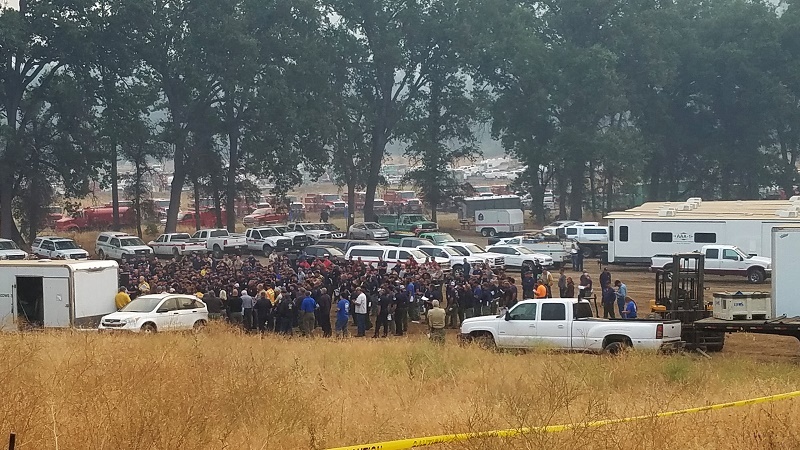
Company Officer 2E is a specialized 40-hour course focused on wildland fire operations and incident management. This course is part of the California State Fire Marshal's Company Officer certification series and is designed for firefighters who have completed Fire Fighter II educational requirements and the prerequisite S-290 Intermediate Fire Behavior course (classroom delivery). This training is essential for company officers who will lead wildland fire suppression operations.
The curriculum provides comprehensive instruction on evaluating and reporting wildland fire incident conditions, analyzing incident resource needs, developing and implementing action plans for wildland fire suppression, deploying resources effectively, establishing incident command posts, creating incident action plans (IAPs), coordinating with cooperating agencies, understanding wildland fire behavior and prediction, applying appropriate suppression tactics and strategies, ensuring firefighter safety in the wildland environment, and completing incident records and reports.
Students engage in practical exercises and simulations that replicate the dynamic challenges of wildland firefighting. The course emphasizes the unique aspects of wildland operations including rapid fire spread, limited resource availability, extended duration incidents, and the integration of multiple agencies with different organizational structures. Successful completion qualifies students to supervise wildland fire operations as company officers.
Confined Space Entry/Rescue Technician - for General Industry
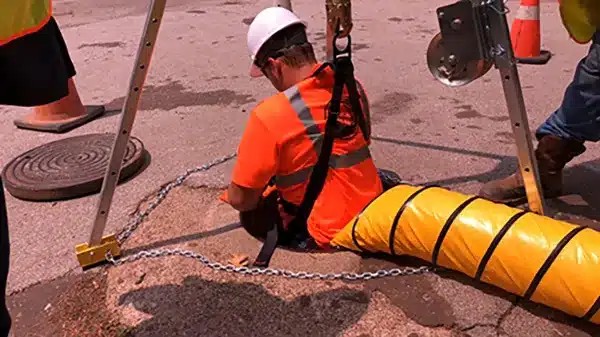
TAPS instructors are retired Fire Department Confined Space Rescue Technicians and trainers. With over 30 years of experience, we provide training to general industries Including Mining, Wastewater Treatment, Oil and gas, agriculture and many more. TAPS conducts a full-site evaluation and builds a plane specifically around our client's specific needs. We develop and evaluate policies, procedures, training and equipment inventories in compliance with CCR Title 8, Article 108, sections 5156, 5157 & 5158 (California's General Industry Regulation for Confined Space Operations) and 29 CFR 1910.146 for general industry.
Course content to include classification of confined spaces and permit required confined spaces, the hazards of confined spaces, regulations regarding confined space entry and rescue, personnel and equipment requirements etc. Manipulative training to include atmospheric monitoring, ventilation procedures, respiratory protection options, communications equipment and procedures, lock-out / tag-out, victim lowering and raising systems, victim packaging and retrieval techniques etc.
Hazardous Materials Incident Commander - 16hrs
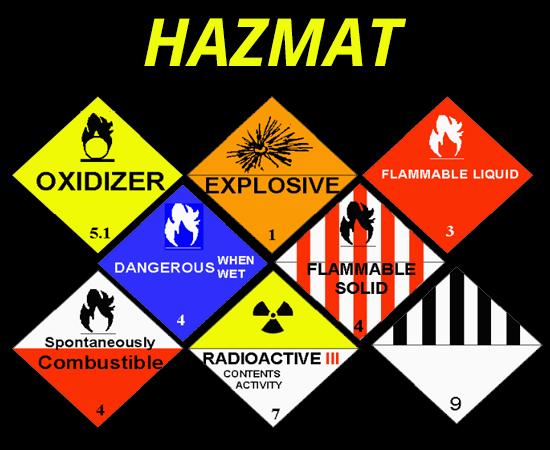
The Hazardous Materials Incident Commander course is a 16-hour specialized training program designed for fire service and emergency response supervisors who will assume command of hazardous materials incidents. This course prepares incident commanders to effectively manage hazmat emergencies from initial response through incident termination while ensuring the safety of responders, the public, and the environment.
The curriculum covers hazmat incident command structure and responsibilities, conducting initial size-up and risk assessment, determining appropriate response strategies (offensive, defensive, non-intervention), implementing the Incident Command System for hazmat operations, coordinating with hazmat technicians and specialists, managing unified command with multiple agencies, understanding Federal Response Plan and National Contingency Plan, implementing site safety and health plans, establishing control zones and decontamination operations, coordinating with environmental and regulatory agencies, making protection action decisions (evacuation, shelter-in-place), managing media relations and public information, documentation and reporting requirements, and conducting post-incident analysis and critiques.
Students work through realistic hazmat scenarios and case studies that challenge their decision-making abilities and test their understanding of hazmat incident management principles. The course emphasizes strategic thinking, resource management, and the unique aspects of commanding incidents involving hazardous materials.
S-290 Intermediate Wildland Fire Behavior - 40hrs
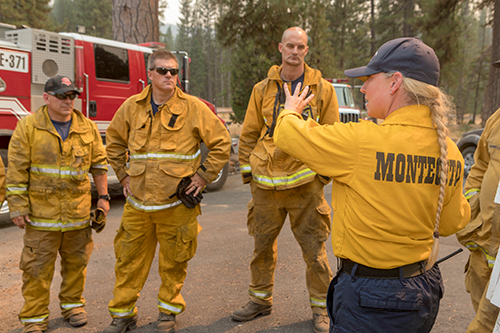
S-290 Intermediate Wildland Fire Behavior is a 40-hour National Wildfire Coordinating Group (NWCG) course that provides advanced wildland fire behavior knowledge essential for safe and effective fire management operations. This is the second course in the NWCG fire behavior series and builds upon the foundation established in S-190 Introduction to Wildland Fire Behavior. The course is designed for firefighters working toward Single Resource Boss qualifications or Fire Effects Monitor positions.
The comprehensive curriculum provides in-depth instruction on fuel characteristics and classifications, weather influences on fire behavior including atmospheric stability, wind patterns, and humidity effects, topographic factors including slope, aspect, elevation, and terrain features, fire behavior prediction using the Fireline Assessment Method (FLAME), extreme fire behavior phenomena including long-range spotting, crown fires, and fire whirls, fire spread calculations and rate of spread determination, utilizing fire behavior tools and aids, applying fire behavior knowledge to tactical operations, making informed fireline decisions based on fire behavior indicators, and ensuring firefighter safety through fire behavior awareness.
The course combines classroom instruction with practical exercises that develop students' abilities to analyze fire environment factors, predict fire behavior, and make sound tactical decisions. Students learn to interpret weather forecasts, assess fuel conditions, evaluate topographic influences, and synthesize this information to anticipate fire behavior changes. This training is prerequisite for advanced wildland firefighting positions and is essential for anyone involved in planning or managing wildland fire operations.
NFPA 1005: Marine Fire Fighting for Land-Based Firefighters - 40hrs
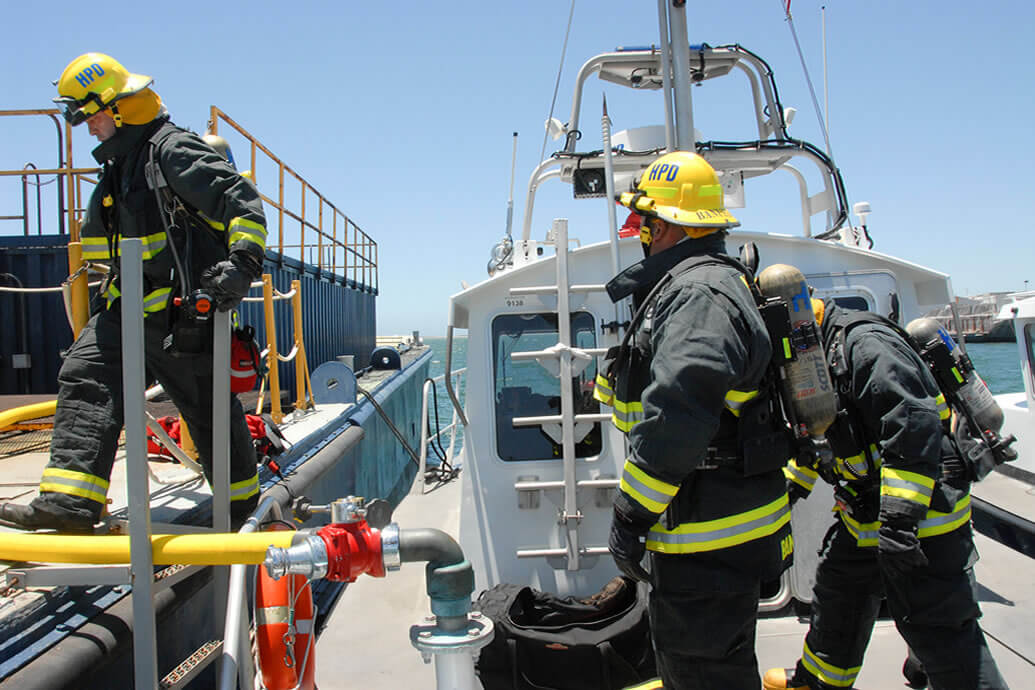
NFPA 1005 Marine Fire Fighting for Land-Based Firefighters is a specialized 40-hour course designed to prepare structural firefighters to respond to fires aboard vessels, in marinas, and at waterfront facilities. Based on NFPA 1005 Standard for Professional Qualifications for Marine Fire Fighting for Land-Based Fire Fighters, this training addresses the unique hazards and challenges of marine firefighting that differ significantly from land-based structure fires.
The curriculum covers vessel construction and design, marine terminology and vessel orientation, hazards specific to marine environments including stability concerns, confined spaces, and cargo hazards, marine fire behavior and unique combustion characteristics, access and approach strategies for vessel fires, water supply operations and specialized marine firefighting equipment, foam operations and application techniques, search and rescue in marine environments, ventilation challenges and techniques for vessel fires, coordination with Coast Guard and maritime authorities, environmental protection and pollution control, salvage and overhaul considerations specific to marine fires, and safety protocols including personal flotation devices and water safety.
Students engage in practical exercises that may include training aboard actual vessels or realistic marine fire simulators. The course emphasizes the critical differences between fighting fires on vessels versus land-based structures, including stability concerns, limited access and egress, complex internal layouts, and the presence of fuel, oils, and other hazardous materials common in maritime settings.
ICS-200: ICS for Single Resources and Initial Action Incidents - 4hrs
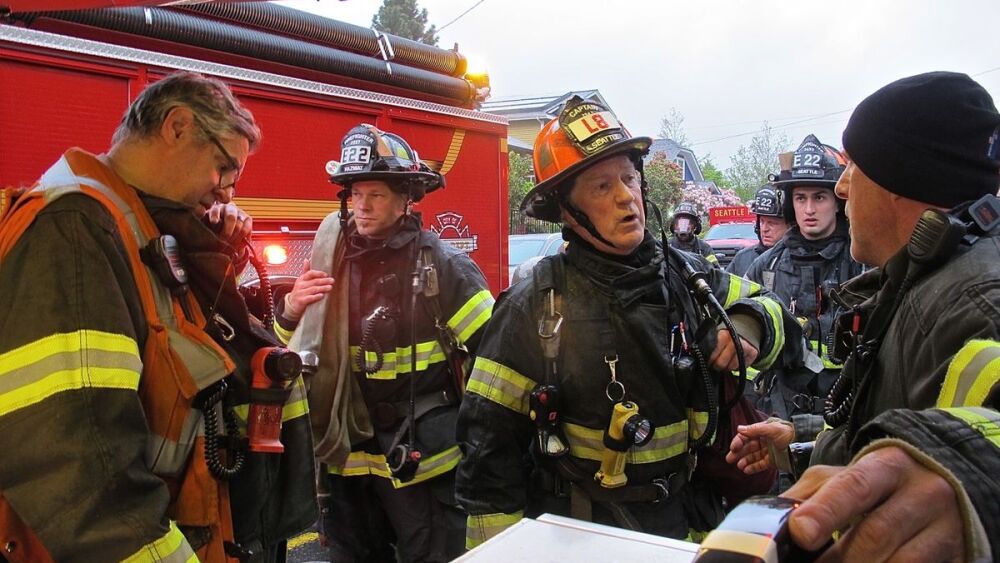
ICS-200 is a FEMA Incident Command System course that builds upon the foundation provided in ICS-100 and is designed for personnel who are likely to respond to incidents in a supervisory role. This 4-hour course provides training on the Incident Command System (ICS) for single resources and initial action incidents, expanding on the basic ICS principles introduced in ICS-100.
The course covers ICS fundamentals review, the incident command and command staff functions (Safety Officer, Public Information Officer, Liaison Officer), General Staff roles and responsibilities (Operations, Planning, Logistics, Finance/Administration Sections), resource management and tracking, establishing incident facilities, developing Incident Action Plans (IAPs), briefing procedures and operational period planning, transfer of command procedures, and demobilization planning.
Students learn how ICS applies to their specific roles during the initial phases of incidents and how to function within an ICS organization. The course emphasizes practical application of ICS principles through case studies and exercises. ICS-200 is a prerequisite for many advanced emergency management and incident command positions and is often required for fire service, law enforcement, emergency medical services, and emergency management personnel. The training can be completed online through FEMA's Emergency Management Institute or in classroom settings.
ICS-300: Intermediate ICS for Expanding Incidents - 21hrs
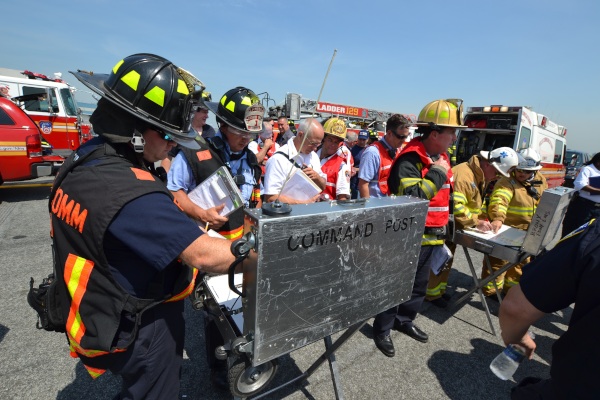
ICS-300 is a FEMA Incident Command System course designed for personnel who require advanced ICS knowledge and application skills. This 21-hour intermediate-level course focuses on the Incident Command System structure and functions for expanding incidents that extend beyond initial response and require multiple operational periods. Prerequisites include completion of ICS-100, ICS-200, IS-700 (NIMS Introduction), and IS-800 (National Response Framework).
The comprehensive curriculum covers the NIMS Command and Coordination component as it supports expanding incidents, detailed ICS organizational structures for complex incidents, roles and responsibilities of Command and General Staff, Division/Group Supervisor functions and span of control principles, Unit Leader responsibilities within the ICS organization, developing and implementing Incident Action Plans (IAPs) for multiple operational periods, resource ordering and tracking procedures, coordinating with cooperating and assisting agencies, establishing and managing incident facilities, logistics support for extended operations, finance and administration considerations, conducting operational period briefings, and transitioning between operational periods.
The course includes a threaded scenario exercise that allows students to practice implementing ICS processes and create an Incident Action Plan for a simulated expanding incident. ICS-300 prepares supervisors and mid-level managers to effectively function within an ICS organization during incidents that grow in size, complexity, or duration. This training is essential for personnel who may assume supervisory positions during major emergencies or disasters.
ICS-400: Advanced ICS for Command and General Staff - 15hrs
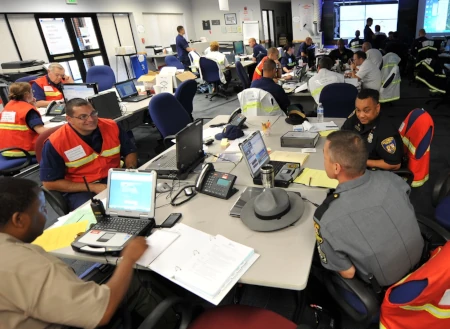
ICS-400 is a FEMA Incident Command System course designed for senior personnel who may serve in command or general staff positions during major or complex incidents. This 15-hour advanced course focuses on complex incident management including Area Command, multi-agency coordination systems (MACS), and managing multiple incidents simultaneously. Prerequisites include ICS-100, ICS-200, ICS-300, IS-700, and IS-800, along with practical experience using ICS principles in actual incidents or full-scale exercises.
The advanced curriculum covers Area Command concepts, purposes, and functions, establishing and managing Area Command organizations, managing multiple Incident Management Teams, complex incident management principles, Multi-Agency Coordination Systems (MACS) and Emergency Operations Centers (EOC) interface, strategic-level decision making and resource allocation, coordinating support for multiple simultaneous incidents, transition and demobilization planning for complex incidents, executive-level briefings and communications, interagency cooperation and unified command at the strategic level, and legal and financial considerations in complex incidents.
The course includes scenario-based exercises and case studies of actual complex incidents to challenge students' strategic thinking and decision-making abilities. ICS-400 is intended for senior fire officers, emergency management directors, law enforcement commanders, public works directors, and other senior officials who may be called upon to manage major emergencies or serve in Area Command roles. This training represents the highest level of ICS training in the FEMA curriculum and prepares leaders to manage the most challenging and complex emergency incidents.